
OCT Retina Scan and Modern Eye Exams: What the Images Can Show
Learn how OCT retina scans help detect macular disease, diabetic eye changes, glaucoma risk, and optic nerve changes during modern eye exams.
الكاتب: فريق عيادة عبد الله للعيون
٣ مايو ٢٠٢٦
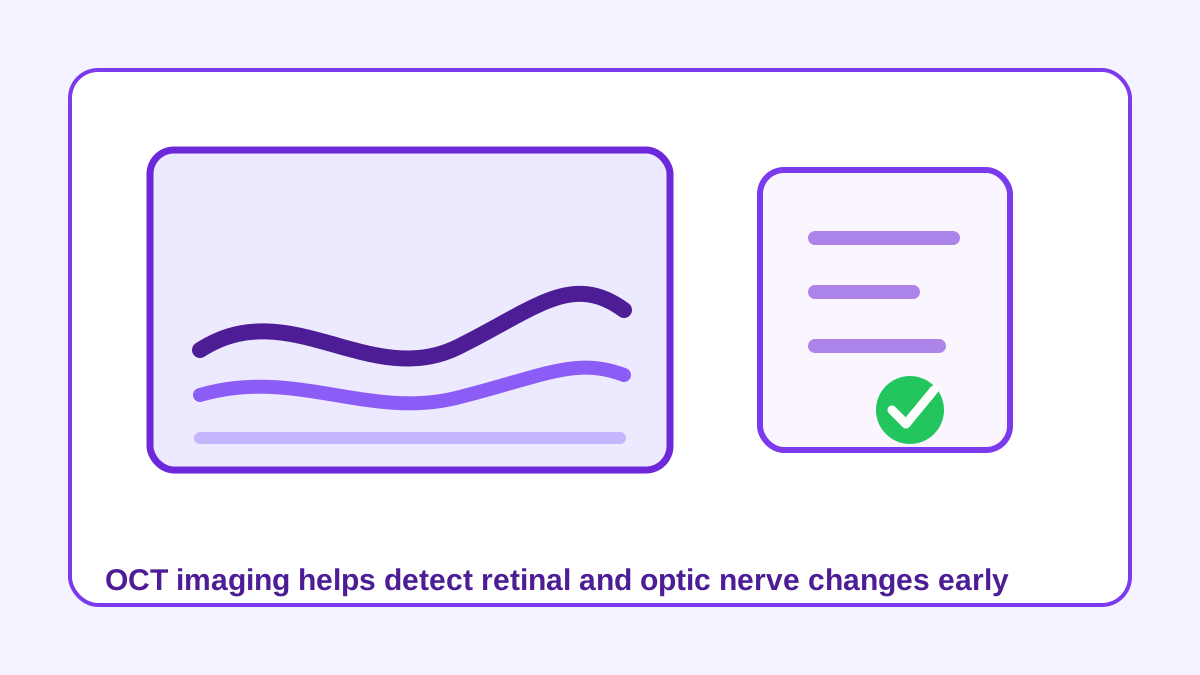
Modern eye exams often include imaging that lets doctors see details that are difficult to judge with vision testing alone. One of the most useful tools is OCT, short for optical coherence tomography.
An OCT scan creates cross-section images of the retina and optic nerve. It is painless, fast, and does not touch the eye. The scan can help detect early structural changes before a patient notices symptoms.
What OCT Can Help Detect
- Diabetic macular edema
- Age-related macular degeneration
- Macular holes or epiretinal membrane
- Glaucoma-related optic nerve thinning
- Retinal swelling or fluid
- Changes after retinal or cataract surgery
OCT does not replace the doctor's exam. It adds objective measurements that can be compared over time.
Why Imaging Matters for Follow-Up
Many eye diseases are monitored by change. A single scan is useful, but repeated scans can show whether swelling is improving, glaucoma is stable, or the macula is changing.
This is especially important for diabetic eye disease, glaucoma, high myopia, and patients with unexplained blurry or distorted central vision.
What About AI Eye Exams?
Artificial intelligence and automated image analysis are becoming more common in eye care. These tools may help flag disease patterns and support screening, but they do not replace clinical judgment.
The strongest approach is still a complete eye exam, good imaging, careful interpretation, and follow-up based on the patient's symptoms and risk factors.
Takeaway
OCT imaging gives your ophthalmologist a detailed map of the retina and optic nerve. If you have diabetes, glaucoma risk, macular symptoms, or unexplained vision changes, imaging may be an important part of a modern eye exam.